
The United Nations Children’s Fund (UNICEF) has urged parents to pay greater attention to the first 1,000 days of a child’s life, describing the period as critical to the child’s growth and development. The Chief of Field Operations and Emergency, UNICEF Nigeria, Judith Leveillee, made the call during a two-day……
The United Nations Children’s Fund (UNICEF) has urged parents to pay greater attention to the first 1,000 days of a child’s life, describing the period as critical to the child’s growth and development.
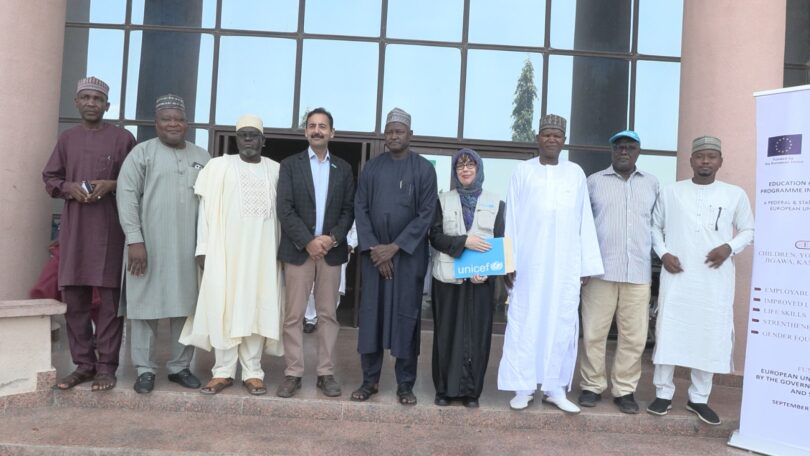
The Chief of Field Operations and Emergency, UNICEF Nigeria, Judith Leveillee, made the call during a two-day working visit by a UNICEF delegation to Jigawa State.
Leveillee said parents should prioritise early childhood development, sanitation, education, healthcare and nutrition, while ensuring that women receive adequate antenatal and postnatal care.
She also commended the Jigawa State Government’s MASAKI Nutrition Programme, describing it as a community-owned initiative that makes use of locally available nutritious foods.
“I love the MASAKI programme. It is a golden opportunity in the first 1,000 days of children’s life. It is where action needs to be taken to make sure children have the best start in life,” she said.
Speaking during a visit to a backyard garden owned by Bahijja Muhammad in Shafar community, Ringim Local Government Area, Leveillee said the state government, in collaboration with UNICEF, was supporting pregnant women and lactating mothers with seedlings and livestock to improve household nutrition.

She called for the expansion of the MASAKI programme from its three pilot local government areas — Ringim, Dutse and Kafin-Hausa — to all 27 LGAs in the state.
During the visit, 1,200 livestock were distributed to pregnant women and lactating mothers in Ringim LGA.
The exercise was flagged off by the Commissioner for Women Affairs and Social Development, Hajiya Hadiza Abdulwahab.
The state nutrition officer said the programme was designed to identify and address malnutrition before it becomes life-threatening.
He said routine health data was used to identify communities with a high burden of malnutrition, leading to the establishment of 300 MASAKI centres across the state’s 30 constituencies.

According to him, the centres serve as weekly meeting points where mothers and caregivers learn how to screen children for malnutrition, prepare nutritious meals using locally available foods and monitor their children’s progress.
He added that children with moderate malnutrition were managed at the community level, while those with severe cases were referred for specialised care.
The nutrition officer said the programme was largely driven by women at the community level, empowering them to improve the nutrition of their children using resources available in their surroundings.